From Banquet to Broadcast: The Awards Show Takes Shape
Awards show staging can preserve the warmth of a banquet or sharpen a broadcast; compare formats and make a room plan that serves both audiences.
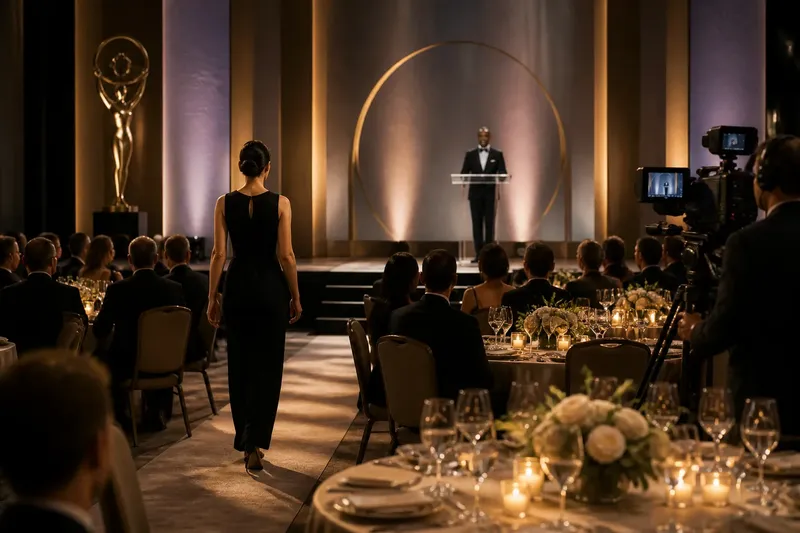
At a banquet table, a winner may have to rise, find the aisle, and cross a room before reaching the microphone. Awards show staging changes that journey when the room also has cameras: the walk becomes part of the program, and the pause becomes airtime. The central choice is not simply how grand the ceremony should look, but whose experience the event is built to serve.
What changes when the room becomes a set?
A banquet is arranged for people sharing a meal and watching the same room. Tables encourage conversation; a central platform gives the seated audience a common focus. The ceremony can feel close to its guests because the distance between a speaker and the people listening is physical and visible.
A broadcast event has another audience, one that encounters the ceremony through selected images and edited sequences. The production needs a clear order of action: who speaks, who receives the award, and what comes next. A stage may look open on screen while concealing equipment or staff beyond the frame. The room and the program seen at home are related, but they are not identical.
This changes how movement is planned. A short walk to accept an award can be a simple courtesy in a ballroom; in a broadcast, it is a sequence that needs to remain clear and hold attention. Designers consider where a presenter enters, where a recipient pauses, and how the next segment begins without leaving guests or viewers unsure what is happening.
Which format makes the strongest connection?
Banquet-centered ceremony
This approach suits a gathering whose main purpose is to recognize peers in the room. Round tables, a modest platform, and a compact program give guests space to talk and keep the ceremony anchored in the shared occasion. It works well when the event values direct acknowledgment over a highly composed screen presentation.
Its limitation is that table layouts can interrupt views, and a room designed around dining may not create a clear sequence for remote viewers. The format can still be filmed, but the result may feel like a record of a gathering rather than a show shaped for viewers at home.
Broadcast-first stage
A broadcast-first ceremony gives the production a deliberate sequence of entrances, presentations, and transitions. The stage may use a central focal point, defined routes, and planned moments for presenters and recipients. This suits an event whose audience includes many people who are not present, especially when each segment needs a clear beginning and end.
The tradeoff is that guests can feel like spectators at a production built for elsewhere. Long pauses, tightly controlled movement, or a stage that looks composed on screen may feel distant from the seats. The room still matters: applause and the presence of colleagues give the ceremony a sense of occasion.
Hybrid room-and-screen design
A hybrid format treats the seated audience and the broadcast as partners. It might preserve banquet tables while giving presenters a defined route and arranging the stage so the program is easy to follow from both places. It suits ceremonies that want the warmth of a gathering without making remote viewers feel they are watching someone else’s dinner.
Hybrid design asks for compromise rather than a perfect solution for either audience. An aisle for award recipients can divide tables; a broad platform can make the room feel less intimate. The useful question is which compromises remain acceptable to the people the event most needs to include.
How should the stage shape the ceremony?
Stage design is a sequence of decisions, not just a backdrop. The platform should make the central action easy to follow: who is speaking, where a recipient stands, and how the next moment takes over. A lectern can make speeches feel formal and stable; open space gives room for a group presentation or performance. The ceremony’s tone and required movement should determine the layout.
Lighting has a similar double duty. It needs to direct attention without making guests disappear into darkness or leaving the stage visually flat. A designer may use a focused pool of light for a speech and broaden it for a group moment, keeping the changes smooth enough that the room does not seem to reset at every cue.
Sound and guest access belong in the same plan. A grand entrance means little if people cannot hear the presenter or if a recipient has to cross a crowded dining area. Account for microphones, accessible routes, table placement, and the movement of presenters and honorees. A stage that looks impressive in an empty room may work differently once tables and people fill it.
How do you choose a format without losing the room?
Start with the ceremony’s primary promise. If the gathering is chiefly a professional meal with recognition woven through it, a banquet-centered design may be the honest fit. If remote viewers are central to the event’s identity, a broadcast-first stage can make the proceedings easier to follow. If both groups matter, a hybrid plan can work, provided its compromises are deliberate.
Say a fictional arts organization expects members to attend in person and also wants distant supporters to follow the awards. The organizers begin with round tables, a platform visible from the dining area, and a clear route from the tables to the stage. They then arrange the program so each recipient has a distinct entrance and a place to pause for recognition. The expected result is a room that still feels like a gathering while viewers at home can follow each award without confusing changes in action.
Before settling on a design, check the plan against the people and tasks it must accommodate:
- Observe who the ceremony is chiefly meant to recognize; if guests in the room are the priority, keep the meal and shared gathering central, but if remote viewers are central, give the program a more deliberate sequence.
- Check whether seated guests can see the platform past table settings and other guests; if views are blocked, adjust table placement or the platform, but if sightlines remain clear, keep the layout.
- Trace the presenter’s and recipient’s routes to and from the stage; if either path crosses a crowded serving area, reroute it, but if both are direct, retain the route.
- Check whether the sound system and microphones make speeches intelligible throughout the room; if they do not, revise the sound plan, but if they do, keep the setup.
- Review the lighting for speeches and group presentations; if a face or the action becomes hard to see, revise the cue or coverage, but if both remain clear, keep the lighting plan.
- Follow the planned transitions from one award segment to the next; if guests or viewers could lose track of the action, simplify the handoff, but if the sequence is easy to follow, retain it.
If a design repeatedly asks one audience to accept a poor view or a disjointed experience, revise the format before treating that compromise as inevitable. Awards show staging works best when the room plan and the program are designed together.
What questions help settle the staging choice?
Does a broadcast ceremony need a large stage?
Not necessarily. A stage needs to support the planned movement and number of people, not simply look imposing. A smaller, clearly arranged platform may serve the ceremony better than a large space with no obvious center.
Can a banquet ceremony work on screen?
Yes, if viewers can follow who is speaking and who is receiving the award. The meal can remain central, but the presentation area and the route to it should be part of the room plan.
What makes a hybrid awards show feel coherent?
Both audiences should be able to follow the same essential action, even if they experience it differently. Clear staging, intelligible transitions, and an engaged room connect the gathering to the broadcast.
When should the format be decided?
Choose it before fixing the room layout and stage. These decisions shape one another, so adding broadcast needs after the physical plan is settled can force awkward compromises.
The best awards show staging makes recognition feel present rather than merely displayed. A banquet, a broadcast-first stage, or a hybrid room can each serve that purpose when the intended audience is clear. When comparing formats, ask whether guests and viewers can follow the honoree’s route, understand the moment of recognition, and see how the ceremony moves on.